
Sergeant A.M. Stuart (sometimes Stewart)
In September 1885, the Mounted Infantry travelled from Cairo, Â Egypt, to Akasheh, via Aswan, Wadi Halfa and Sarras.
‘The Record of Services of the Durham Light Infantry’ (2nd Battalion) [D/DLI 2/2/135] records that Sergeant Stuart was left behind at Sarras, with orders to join the headquarters of the Company at Akasheh. He travelled with some soldiers from The Royal Highlanders and The Duke of Cornwall’s Light Infantry to Ambigole Wells, where they found about three miles of railway torn up. They had just begun the repair of the railway when about 600 of the enemy appeared, demanding the surrender of Fort Ambigole. The working party made a rush for the fort with fixed bayonets and reached their goal without casualty.
The garrison at Fort Ambigole consisted of 81 men and, the following morning, after firing throughout the night, they found themselves surrounded on three sides by the enemy. On the fourth side were the station buildings, armoured train and spare wagons. Luckily for the soldiers in the fort, the enemy had not attempted to seize the train, as it contained 7000 rounds of ammunition.
Sergeant Stuart led ten volunteers to unload the ammunition. Under heavy fire, he mounted the wagon to hand down the boxes to his men, who were screened by a truck. The ammunition was brought safely into the fort and Sergeant Stuart was later awarded the Distinguished Conduct Medal for his bravery.
Stuart and two privates left Fort Ambigole to seek reinforcements and met a strong party including the Mounted Infantry under the command of Major Dickson of The Berkshire Regiment. Lieutenant de Lisle volunteered to take a patrol to assist the garrison.

They cut their way through the enemy, and found the garrison ‘in good spirits, but wearied with the strain and want of rest.’ Before Major Dickson’s forces arrived, the Arabs withdrew.
According to the Army Casualty Returns held in The National Archives [ref. WO 25/3454], Colour Sergeant Stewart died on 18 September 1896.
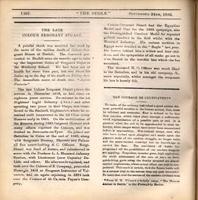
An article in The Bugle records his sudden death at Deolali, India, where he had been serving as Sergeant Major in the Musketry School.
The obituary follows his career from when he enlisted in the 1st Highland Light Infantry (71st) in December 1878; how he came to be with the Mounted Infantry of the 2nd Battalion The Durham Light Infantry in Egypt in 1885; how he became Colour Sergeant of E Company; and his subsequent career. Sergeant Stuart left behind him a widow and four children.